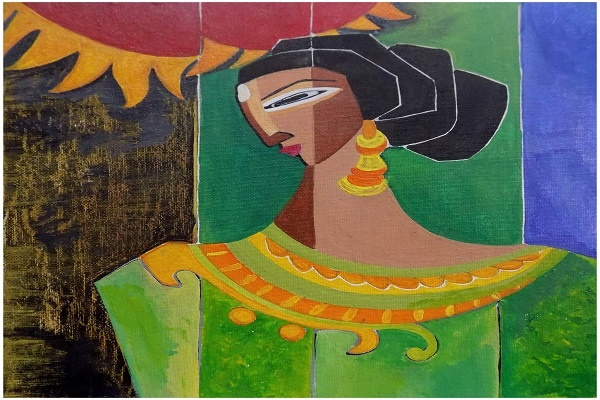
Art as the Language of Modern Society
DOI:
https://doi.org/10.62012/2aj6wb22Keywords:
Modern Art, Social Communication, ContemporaryAbstract
Art in modern society has a role that is not only limited to aesthetic aspects, but also as a medium of social communication that reflects the dynamics of people's lives. The development of technology and globalization has encouraged the transformation of art forms and functions to be more widespread, including through digital media that allows the global dissemination of messages without space and time limits. In addition, art also functions as a means of social reflection that is able to convey criticism of various contemporary issues such as the environment, social inequality, and cultural change. Thus, art has become a universal language that connects cultural values, social identity, and public awareness in the face of changing times.
Downloads
References
[1] A. Adeloye, B. Afolabi, and P. Odewole, “The Intersection of Social and Political Movements with Art Through History,” Art Time, 2025, doi: 10.62425/at.1484796.
[2] S. Oborska, V. Pylypiv, O. Hubernator, M. Kozlovska, M. Pashkevych, and V. Semykras, “Exploring the Intersection of Art, Culture, and Contemporary Scientific Discourse,” Int. J. Cult. Hist. Relig., 2025, doi: 10.63931/ijchr.v7i1.95.
[3] U. Kakarla, “The Evolution of Contemporary Art: A Journey Through Cultural Shifts,” Int. J. Soc. Sci. Humanit. Invent., 2024, doi: 10.18535/ijsshi/v11i04.02.
[4] L. Han and H. Gong, “On the Critical Role of Modern Installation Art,” Front. Art Res., 2022, doi: 10.25236/far.2022.040612.
[5] A. Synakh, N. Svitailo, O. Boyko, T. Povalii, and S. Podolkova, “Visualization and Virtualization of Art as New Dimension of Communicative Interaction and Social Management System,” Socio-Cultural Manag. J., 2021, doi: 10.31866/2709-846x.2.2021.246727.
[6] K. Rutten, “Participation, Art and Digital Culture,” Crit. Arts, vol. 32, pp. 1–8, 2018, doi: 10.1080/02560046.2018.1493055.
[7] X. Li and J. He, “Exploring the Emotional Design of Digital Art Under the Multimodal Interaction Form,” pp. 561–570, 2023, doi: 10.1007/978-3-031-35699-5_40.
[8] J. Mensah, “Rethinking the contribution of creative economies in Africa to sustainable development. An empirical research of creative intermediaries in Accra’s contemporary art sector,” Int. J. Cult. Policy, vol. 31, pp. 551–568, 2025, doi: 10.1080/10286632.2025.2470814.
[9] M. Zhang, “Research on the Integration of Traditional Elements and Modern Design in Visual Arts,” Int. J. Educ. Humanit., 2024, doi: 10.54097/6s313m15.
[10] Y. Bobrovnyk, V. V Nedilko, and S. Nezhyva, “SOCIOLOGICAL APPROACH TO ANALYZING THE INTERACTION OF ART AND SOCIETY: IMPACT, PERCEPTION, AND ROLE IN CULTURAL DEVELOPMENT,” Humanit. Sci. Curr. issues, 2023, doi: 10.24919/2308-4863/65-1-6.
[11] Z. Zhou, “Innovative Approaches to Art Education by Integrating Environmental Awareness in Art Curriculum in Beijing,” Int. J. Acad. Res. Progress. Educ. Dev., 2024, doi: 10.6007/ijarped/v13-i1/20657.
[12] S. K. A. A. Tiwari, “The Impact of Globalization on Local Cultures: Exploring the Tensions between Cultural Preservation and Exchange,” PRAJNANA, 2024, doi: 10.59467/pj.2024.15.15.